Feature

A feature by Vanessa Bunn for EXTRA! EXTRA!
Shakespeare
staging the world
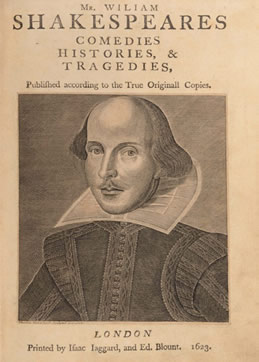
Engraving of William Shakespeare by Martin Droeshout
From the Arundel First Folio 1623
By Permission of the Governors of Stonyhurst College
British Museum
19 July – 25 November 2012
He was not of an age, but for all time. – Ben Johnson
The Round Reading room at the British Museum currently houses an expansive exhibition which explores the social, economic and political condition of Renaissance Britain and London through an encapsulating Shakespearian lens. Through the works of Britain’s foremost enduring playwright who in no small part helped shape the City, this exhibition transports attendees into the world in which Shakespeare wrote while simultaneously drawing unforced parallels between London then and now. Public holiday riots were expected, the Cotswold Olimpick Games were a draw for all walks of society, entertainment was big business and misdemeanours were rife in notoriously lawless areas like Bankside.
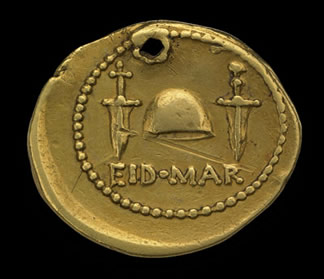
Ides of March Coin
Reverse of a gold aureus commemorating the assisination of Julius Caesar, showing daggers and a cap of liberty 43 - 42 BC
Lent by Michael Winckless
(c) Trustees of the British Museum
The British Museum has worked in collaboration with the Royal Shakespeare Company in creating this exhibition with engrossing results. Actors from the RSC have recorded digital interventions which are layered amongst the wealth of objects and paintings depicting the era. A wonderful portrait of brooding poet and satirist John Donne is accompanied by the utterances of one of Shakespeare’s most famous malcontents, Jacques, of A Midsummer Night’s Dream. Following gently teased out comparisons between Cleopatra and Marc Antony and Elizabeth I and The Earl of Essex, we are treated to a moving interpretation of Cleopatra’s final speech by Harriet Walter.
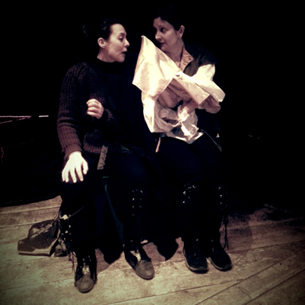
Portrait of Richard III with a broken sword, Unknown artist
c. 1523 - 1555, Oil on panel
(c) Society of Antiquaries, London, 2011
Maps are integral to the sense of place which is delved into in every aspect, from mercantile through geographic to aesthetic. Francis Drake’s circumnavigation of the world, British colonisation and an accompanying fascination with all things considered foreign and ‘other,’ and the influence of Shakespeare’s own Warwickshire on his works are all considered. Shakespeare’s interest in magic and witchcraft is interspersed with interesting exploration of the more general historical moment with the legacy of Guy Fawkes and the North Berwick Witch trials forming focal points amidst features such as beautiful amuletic talismans and more gruesome relics. Attention to detail is noticeable throughout the exhibition; some little gems really tickle such as a caricature found in a 17th Century schoolboy’s textbook of his Latin Master, creating a cheering connection between Shakespeare and his contemporaries and attendees, who first encountered the wonderful language they became masters of, as we all do with their humble ABCs.
The exhibition investigates what it was like to be a theatre-goer at the time, be it as a groundling or a courtesan. Mislaid belongings of both, which have been excavated following works at the sites of The Rose and The Globe theatres, feature as exhibits, sketching a fascinating picture of the habits and vices of the first audiences of Shakespeare’s works. Considered and refreshingly uncommon quotations from the plays form a thread through the objects and information on display.
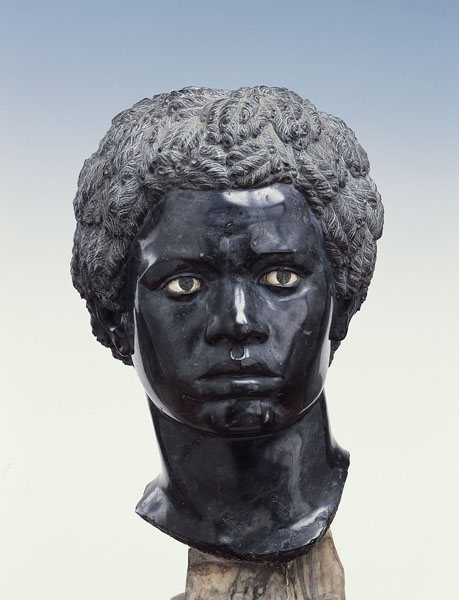
Nicholas Cordier (1567 - 1612), marble bust of a black African Rome c. 1610
Dresden, Staacltiche, Kuntsammlungen, Skulpturensammlung
The final section of the exhibition is deeply poignant. Having spent an afternoon sifting through the inspirations and inclinations of Shakespeare, Sir Ian McKellan’s dulcet tones as he reads lines from Prospero in The Tempest provide a touching close. The final exhibit, the so-called Robben Island Bible, brings the tour full circle following from one of the earliest tomes of Shakespeare’s collected works in the first room. This disguised, forbidden, much-loved and used collection of the bard’s writing is a perfect example of how his works have filtered effortlessly into modern consciousness and, their seemingly limitless ability to inspire, comfort and cheer.
Admission: £14 plus a range of concessions
Booking: 020 7323 8181
www.britishmuseum.org
British Museum
Great Russell Street, London, WC1B 3DG
Copyright © EXTRA! EXTRA All rights reserved