|
The Histories Royal Shakespeare Company
Richard III
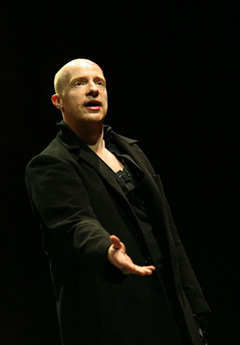
Richard III (Jonathan Slinger) Photo by Ellie Kurttz - Copyright RSC
by William Shakespeare
Directed by Michael Boyd
Roundhouse
(in repertoire)
A review byKirsty Harris for EXTRA! EXTRA!
Richard III is the last in the RSC’s epic history cycle project. But not just epic for those who have been captivated throughout all eight plays and seen the characters and plots develop with the level of power appropriate to such a grand project. This production stands alone as an exemplary piece of Shakespeare and makes one want to see the rest in the series purely for the chance to experience more of this high standard. There is a wonderful sense of camaraderie in the audience, those who have seen the previous seven plays are reeling with the stories already told and hungry for the next and final instalment. This is so much more than a play; this is part of a wider vision and journey. By manipulating and murdering his way to the top, the crippled and bitter Richard III constructs his own downfall. Jonathan Slinger creates a violently disturbed centre to a maelstrom of political intrigue. He uses the physical disability of the character conversely to move more freely about the stage and about his own person, swinging and shuddering his deformed leg so as to be in a state of almost constant movement. He creates the impression of an agile spider, deftly twisting a poisonous web about his prey. The open space of the Roundhouse contributes to a generally open tone to the piece. The political and personal world of a multitude of royals is played before us and with us. The captivating action whisks the audience up in its grasp and does not let go until the curtain call. The performance styles are also open in their nature, projecting all the torment, rage and fury of the betrayed right out to the back of the auditorium. Katy Stephens as the mad widow of the murdered Henry VI is exceptional at this. She gives an intensely well crafted and yet forcefully wild performance that entrances the viewer whilst chilling them to the bone. Every performance in Richard III is faultless. From the smaller roles that lift the tragic action to the determined, commanding leads. The younger, members of the cast go far beyond good performances as ‘children’ roles. They all embody their different characters to remarkable degree, standing strong with the rest of the adult cast. Director Michael Boyd’s use of stylised devices, such as a feather falling from above each time someone is killed, is perfectly measured so as not to overload the audience with weighty symbolism but still helps to construct a visually arresting piece of work. The repeating motif of a pair of heavy metal doors opening and closing at the back of the performance area frames the entrances and exits with formidable violence. The loud clangs the doors make also mark out and add extra energy to the comings and goings of the characters - something which helps to untangle the, at times, mind boggling confusion of kings and queens, lords and ladies in ones mental family tree. There is boundless energy and strength in Richard III, this is a play full of anger. One feels it from the first scene and it is anger that sustains the collective emotion throughout. But at no time does this piece fall into the trap of portraying all this rage with tiresome wailing or inward, static, scrunched faces. All the passion is flung outward at other characters and ricocheting off to hit the audience. All, that is, except Slinger’s leading role, whose character partly gets his way by remaining inward and playing off others emotional honesty. Sometimes epic can mean too long, too much or too tiresome. Richard III is epic in the best sense. It is full of passion, plot and politics, but holds the audience throughout with excellent performances, staging and unlimited energy. The obvious intelligence of the company and their deep understanding of the language makes it easy to be swept up into the world of the play. This piece is also part of the greater epic of the History Cycle and the positive influences of experiencing the works together are obvious. A sense of history is embedded into this final instalment, giving it a magic all of its own that one can sense, regardless of having seen any of its predecessors. That is what makes this particular epic so outstanding.
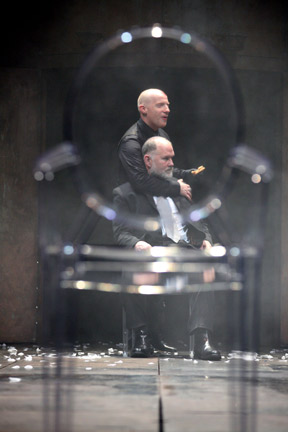
Richard III (Jonathan Slinger) & , Tom Hodgkins as (Lord Hastings, The Lord Chamberlain) Photo by Ellie Kurttz - Copyright RSC
18 or 25 May – at 3pm Roundhouse Chalk Farm Road London, NW1 8EH
|