|
Spartan Dogs presents The Devil Is An Ass
Written by Ben Jonson
Directed by Kate McGregor
White Bear Theatre
16 November – 5 December 2010
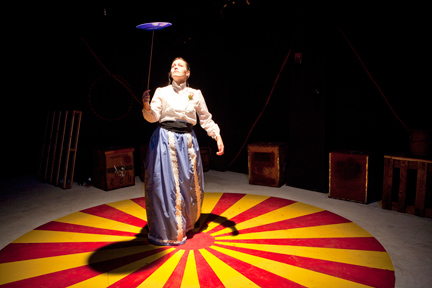
A review by Richard J Thornton for EXTRA! EXTRA! The most frustrating thing about theatre is being reminded that is it just that. From the moment the clouds of talcum powder hit your nostrils, the feeling of acted performance is unshakable. It’s like when you start to notice those black ovals that appear on the cinema screen where the editor has taped two reels together (as Brad Pitt points out in Fight Club); like finding a brush hair in an immaculate oil portrait. And so it is with The Devil is an Ass, despite not needing to transport you far, (it’s set in London after all), you never feel as if you leave the bench at the White Bear Theatre. Jonson’s plot is by nature confusing and deceptive - the ambitious fop Fitzdotrill seeks wealth, status and despotic control of his wife, while the devil Pug has been allowed a trip to London to cause Fitzdotrill distress. Comedy blooms via the juxtaposition of Pug’s inadequacy for malice, Fitzdotrill’s eccentric greed and the host of other characters who try to dispossess him of his wife, money, and not least his sanity. The corrupting wheels and back-hand deals of London’s street life make for a complex collage, and paired with the unfamiliar language of Jonson, create quite a coded imbroglio. Unfortunately, this production tightens these theatrical knots rather than unties them. The speed of the dialogue and the convoluted entrances and exits make the mischief into mayhem and leave the audience straining for illumination. McGregor’s shift of setting from early 17th century to Dickensian London brings a new angle to the text, but the odd and novel use of circus props obscures the time period rather than clarifying it. It is difficult to grasp the classes of the characters, which would help in the task of believing in them, and it is even more difficult to feel which characters hold the power. The individuals play their parts with steel, but the direction of the group as a collective seems sloppy. There’s an interesting vision buried somewhere deep in the show, but the chaotic, un-engaging speech and indistinct settings muddy it and slip more toward soporific than Victorian tonic. The play on paper may call for a large cast, and one would hope an array of faces and styles would help structure and illuminate the action. As it happens, the stage is overpopulated, like a community where a new family moves in each week; there’s no time to acquaint yourself with one character before another breaches the arena. In a cosy theatre like the White Bear, it is overwhelming, and you wonder whether it wouldn’t have been possible to double-up on actors, and sharpen up on characterisations. Nevertheless, there is some fine acting in the house. Davin Eadie’s Merecraft gives a conniving edge via tortured eyes and the greed of pursed lips, Emily White’s Tailbush is perhaps the only character who rides comfortably in the saddle of 19th century pride and self-importance and Oliver Lavery’s Fitzdotrell is electric if not a little too unchained. In fact, one of the greatest acting delights came in the sparky cameos of Gareth Turkington, whose shrieks and wriggles deemed his minor roles into faces worth remembering. Part of the diffuclty with the production is the stretching of 17th century characters into 19th century skin. Phil Bishop’s Pug seems a poor man’s Caliban and his eccentric and pathetic ‘devilishness’ feels out of place amongst the swagger of Oliver Powell’s Shackles and his Newgate guards. Despite Jonson’s intension to have the Londoners’ deceit overshadow Pug’s mischief, the comparison is only felt when it is verbally explained in the denouement, and one feels rather cheated that this attractive revelation was not made more evident throughout the piece. The show’s design is disappointing, not least due to its lack of consistency. The circus focus that greets the arriving audience has potential for lasting appeal, but despite the interactive interval which props up the theme, the show seems to lose interest in it, instead resorting to the more minimal and suggestive style of bleak wooden pallets and boxes. There is a beautiful scene where Pug holds a hoola-hoop window in place for the adulterous lovers to meet through, but this imagination is fleeting, and we soon return to reliance on a difficult text, due to antiquated syntax. The lighting, designed by Claire Childs, is noticeably interesting, subtle shifts from orange to blue as romance turns to business, and pocketed candlelight add much needed theatrical layers. This is a difficult text to enact and direct, and there’s some real talent drifting behind the production. But alas, the play does drift, and the slick cohesion which an audience needs in order to appreciate such a wordy and deceit-based play is sadly lacking. If you love Ben Jonson, and know the play well, you’ll probably get much more from this production than most. But if you’re looking for an introduction into Renaissance wit and debauchery, this might be like learning French from reading Proust.
Box Office: 020 7793 9193 White Bear Theatre 7.30pm Tuesday – Saturday Tickets: £13/£10
Copyright © EXTRA! EXTRA All rights reserved
|